The Honeywell R7284 hard lockout means the burner tried to start several times but failed. So, it goes into lockout mode to prevent dumping large amounts of oil in the combustion chamber. The five most common reasons behind it are:
- Running Out Of Oil
- Fuel Delivery Issues
- Ignition Issues
- Flame Detection Issues
- Electrical Issues
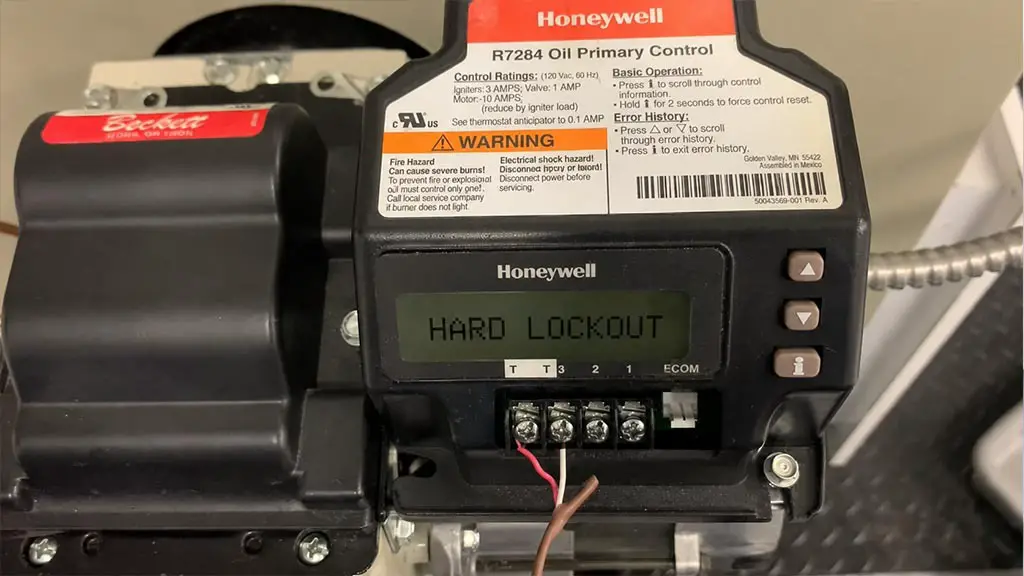
In many cases, simply resetting the control will get the burner running again. However, if the lockout keeps returning, one of the problems above is usually responsible. You’ll learn how to fix all of them in this guide. So, let’s dive in!
Honeywell R7284 Hard Lockout [Causes & Fixes]
Before looking into the reasons why your oil primary control goes into lockout mode, let me explain to you how the whole thing works. Then, you’ll have a complete picture and know all there is to know about moving ahead with the fix.
The Honeywell R7284 is the safety brain of your oil burner. Every time your thermostat calls for heat, the control starts the burner motor, powers the ignition system, and waits for proof of flame from the cad cell.
If the burner fails to establish a flame, or if the control loses flame verification during operation, it shuts the burner down to prevent unsafe operation. After multiple failed ignition attempts, the unit enters a hard lockout state and refuses to restart until it is manually reset.
Because many hard lockouts are caused by temporary issues such as air in the fuel line, a recent oil delivery problem, or a brief ignition failure, the first thing I always recommend is performing a Honeywell R7284 hard lockout reset before diving into deeper troubleshooting.
How to Perform The Honeywell R7284 Hard Lockout Reset?
If you’re looking for the Honeywell R7284 hard lockout reset button, you’ll find it on the front of the control itself. The reset function is accessed using the “i” information button located on the face of the unit.
To perform a Honeywell R7284 oil primary control hard lockout reset:
- Press and hold the “i” button for approximately 15-20 seconds.
- Wait for the lockout message to clear from the display.
- Allow the burner to attempt a normal startup sequence.
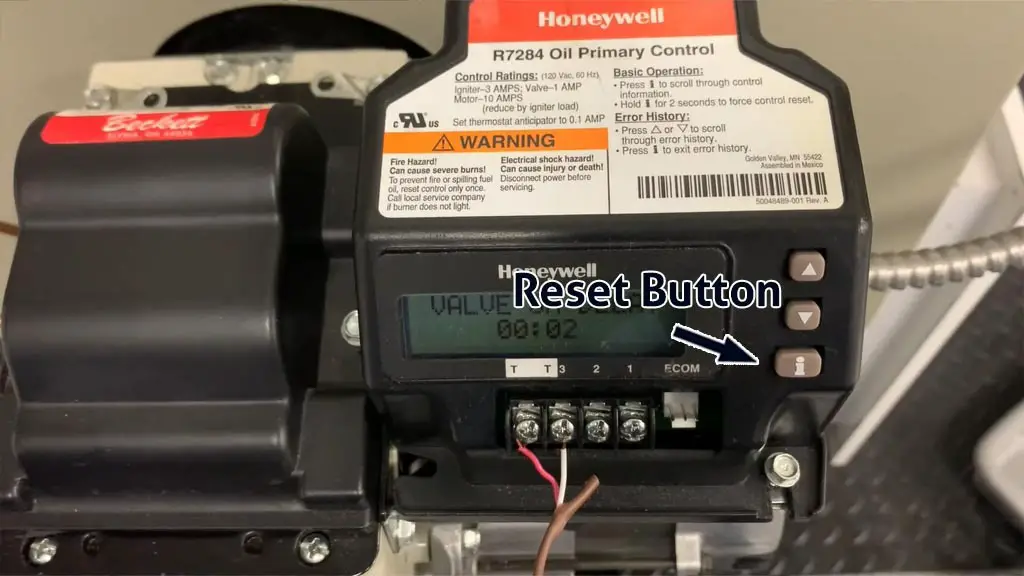
If the burner starts and continues operating normally, the lockout may have been caused by a temporary interruption in fuel supply or ignition. However, if your Honeywell R7284 hard lockout reset is not working and the burner immediately returns to lockout, there’s an underlying issue that must be corrected before the system will operate reliably again.
One important warning before you start pressing buttons repeatedly. Avoid performing multiple reset attempts in a row. Every failed ignition cycle can introduce additional oil into the combustion chamber.
If enough unburned oil accumulates, the next successful ignition can trigger a delayed ignition event, often called a puff-back. In severe cases, this can create a small combustion explosion inside the burner chamber, resulting in soot, smoke damage, and expensive cleanup.
That’s why experienced oil burner technicians generally advise against repeatedly resetting a burner that continues to lock out.
With that said, if a reset doesn’t solve the problem, there are usually five common causes responsible for a Honeywell R7284 oil primary control hard lockout. Let’s go through them one by one.
- Running Out of Oil
One of the most common reasons you’re facing Honeywell R7284 hard lockout problems is a fuel supply problem.
In many cases, the issue starts when the oil tank runs empty or gets extremely low. Once that happens, the burner begins pulling air into the fuel line. Unfortunately, the oil pump can’t move air the way it moves fuel.
The result is simple. The burner attempts to start, but little or no oil reaches the nozzle. Since no flame is established, the R7284 eventually shuts everything down and enters a hard lockout.
This problem is more common than most homeowners realize. In fact, many people assume they still have fuel because the tank gauge shows oil remaining.
Unfortunately, tank gauges can stick or become inaccurate over time. That’s why it’s always worth physically verifying the oil level if a lockout appears unexpectedly.
Some common signs of an oil supply problem include:
- The lockout appeared after the tank level became low.
- The burner recently ran out of oil.
- The issue started after replacing an oil filter.
- The burner attempts to start but never fully ignites.
- The system worked normally before suddenly locking out.
Running out of oil isn’t the only fuel-related problem that can trigger a hard lockout, though. Contaminated fuel can also create almost identical symptoms.
Over time, water can enter the oil tank through condensation, leaking fill caps, damaged vent pipes, or groundwater intrusion. This is especially common with older underground tanks. Since water is heavier than heating oil, it settles at the bottom of the tank where the fuel pickup is often located.
When water-contaminated fuel reaches the burner, ignition becomes unreliable. The burner may start one day, refuse to start the next, or repeatedly enter hard lockout without any obvious explanation.
Technicians often check for water contamination using a special water-detection paste. The paste is applied to a dipstick and lowered into the tank. If water is present at the bottom, the paste changes color immediately.
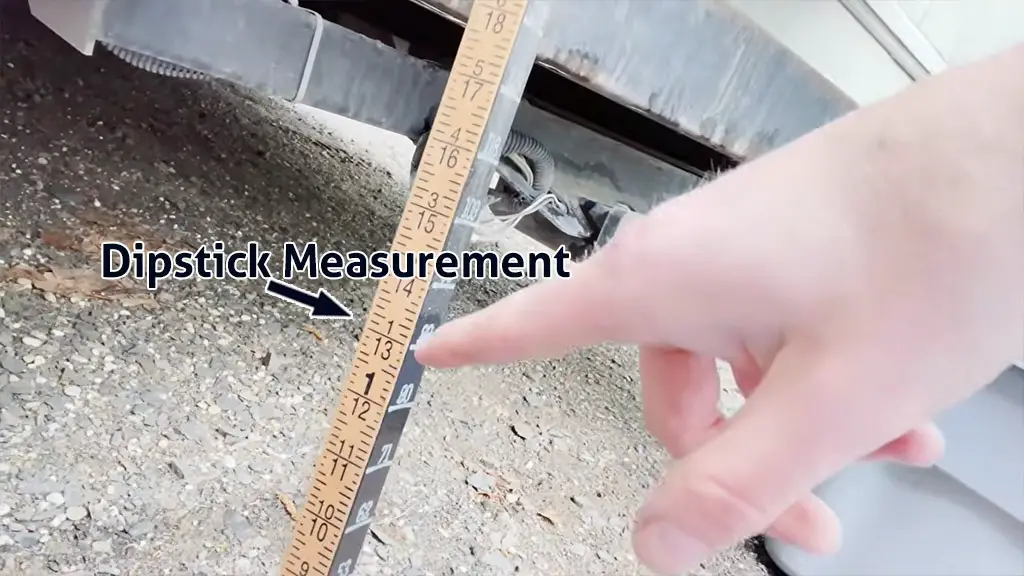
Fuel contamination is more likely if:
- You have an underground oil tank.
- The tank is older.
- Lockouts seem random and intermittent.
- You continue experiencing ignition issues despite replacing other components.
Solution:
If the tank is empty or extremely low, refill it first and then bleed or prime the fuel line to remove trapped air. Once fuel is flowing properly again, reset the Honeywell R7284 and allow the burner to restart.
If water contamination is present, the contaminated fuel must be removed before the problem can be permanently resolved. Replace the oil filter, bleed the fuel system, and correct whatever allowed water to enter the tank in the first place. In severe cases, professional tank cleaning may be necessary.
The important thing to understand is that both situations create the same end result. The burner cannot establish a stable flame, and the Honeywell R7284 responds exactly as it was designed to by shutting the system down and entering hard lockout.
- Fuel Delivery Issues
If you’ve confirmed there’s plenty of oil in the tank and the fuel isn’t contaminated, the next thing I’d investigate is whether the burner is actually receiving enough oil to create a proper flame.
Remember, the Honeywell R7284 doesn’t really care why the flame failed to appear. Its job is simply to monitor the startup process. If the burner attempts to fire and the control doesn’t see a stable flame within the allotted time, it shuts everything down and enters a hard lockout.
That’s exactly why fuel delivery problems often trigger this error. The three most common culprits are a clogged nozzle, a restricted oil filter, or a failing oil pump. Let’s start with the nozzle.
The nozzle’s job is to transform liquid fuel into a fine mist that can be ignited by the electrodes. The opening inside the nozzle is incredibly small. In fact, a single speck of dirt can be enough to affect the spray pattern.
When that happens, the burner may still receive fuel, but it won’t atomize correctly. Instead of producing a clean flame, ignition becomes weak, delayed, or inconsistent. One of the most common clues is intermittent operation.
The burner may:
- Run perfectly for hours.
- Operate normally all day.
- Lock out randomly overnight.
- Restart immediately after pressing reset.
That’s because the nozzle isn’t necessarily completely blocked. It may simply be producing a poor spray pattern that occasionally fails to ignite. Pet hair, dust, sludge, and fuel contamination can eventually find their way into the nozzle. Even a relatively new nozzle isn’t immune.
I have a cat theory—if you have a pet, it’s most likely caused the nozzle to get clogged up. Now, let’s move on to see how a bad oil filter can cause similar symptoms.
Every gallon of fuel entering the burner passes through the filter first. Over time, the filter collects dirt, rust particles, sludge, and other contaminants from the tank.
As the filter becomes restricted, fuel flow begins to decrease. Unlike a completely empty tank, a partially clogged filter can be deceptive. The burner may still receive enough fuel to run most of the time, but during certain operating conditions it may struggle to maintain proper pressure.
If the filter hasn’t been replaced within the past year, it immediately moves near the top of the suspect list. The oil pump is another possibility.
The pump’s job is to pull fuel from the tank and deliver it to the nozzle at a specific pressure. Many oil burners operate at roughly 100 PSI, while some systems are adjusted higher depending on the burner setup.
If the pump begins to wear out internally, pressure can become inconsistent. In some cases, the pump may:
- Produce adequate pressure during one cycle.
- Struggle during the next.
- Lose prime.
- Develop internal leakage.
The result is reduced fuel delivery and unreliable ignition. A completely failed pump typically prevents the burner from firing at all. However, a weakening pump can create intermittent lockouts that are much harder to diagnose.
One useful clue comes from what happens after you press the reset button.
If the burner consistently fires immediately after resetting, technicians often become less suspicious of major fuel delivery failures such as a completely blocked filter or totally failed pump.
Those types of failures usually don’t fix themselves. However, partially restricted filters, contaminated nozzles, and marginal pumps can absolutely create random lockouts before eventually failing completely.
Solution:
The nozzle should generally be replaced rather than cleaned. Nozzles are inexpensive, and even minor contamination can affect the spray pattern. If the nozzle is over a year old, replacing it is often one of the first maintenance items worth tackling.
Next, inspect and replace the oil filter if it hasn’t been serviced recently. Most oil burner technicians replace the filter during annual maintenance because it’s one of the cheapest ways to prevent fuel-related lockouts.
If fuel delivery issues persist after replacing the nozzle and filter, the pump should be evaluated. This typically involves checking fuel pressure with a gauge while the burner is operating.
Low or unstable pressure readings often point toward a failing pump, air leaks in the fuel line, or restrictions somewhere in the fuel system.
While troubleshooting, pay attention to any oil smells, delayed ignition, or small puff-backs during startup. These are often valuable clues that fuel is reaching the combustion chamber but isn’t burning correctly.
Finally, if you’re replacing components, don’t stop at the symptom. Ask why the component failed in the first place. A clogged nozzle often traces back to dirty fuel. A dirty filter frequently points to sludge inside the tank.
Simply replacing parts without addressing the underlying contamination may temporarily solve the lockout, only for it to return a few months later.
In many cases, replacing the nozzle, changing the filter, and verifying proper pump pressure is enough to eliminate fuel delivery issues and restore reliable burner operation.
- Ignition Issues
If fuel is reaching the burner but the Honeywell R7284 still enters hard lockout, you should check the ignition system next. Among all ignition-related problems, dirty, worn, or misaligned electrodes are often the biggest offenders.
The electrodes are responsible for creating the spark that ignites the oil mist coming from the nozzle. Over time, carbon buildup, corrosion, and normal wear can weaken that spark.
In other cases, the electrodes may simply shift out of position. Oil burners are surprisingly sensitive to electrode placement, and even a small change in gap or alignment can make ignition unreliable.
One of the strongest clues pointing toward an electrode issue is a slight oil smell or puff-back when the burner finally starts. This tells you fuel is reaching the combustion chamber, but it isn’t igniting immediately. Instead, unburned oil accumulates until a successful ignition occurs.
A failing ignitor or ignition transformer can produce nearly identical symptoms. The transformer supplies the high voltage needed to create the ignition spark.
As these components age, they often fail intermittently rather than completely. The burner may operate normally for days, then suddenly lock out during a startup cycle before working perfectly again after a reset.
This type of random behavior showed up repeatedly in technician discussions. Many described systems that would run through multiple heating cycles without issue, only to experience a single failed ignition and enter hard lockout.
The burner motor can also be responsible. If the motor develops a dead spot or the start capacitor begins to weaken, the burner may occasionally fail to reach proper operating speed.
Without adequate airflow and fuel delivery, ignition becomes unreliable, and lockouts occur. Some common signs of ignition-related problems include:
- Slight oil smell during startup.
- Small puffbacks.
- Delayed ignition.
- Intermittent hard lockouts.
- Burner runs normally after pressing reset.
- Problem occurs randomly rather than continuously.
Solution:
Start with the electrodes. Inspect them for carbon buildup, cracks, wear, and improper spacing. Clean dirty electrodes and replace them if they’re damaged or heavily worn. If electrode positioning appears questionable, check the Honeywell R7284 hard lockout manual to verify the correct gap and alignment.
Next, inspect the ignitor or ignition transformer. A weak spark often causes intermittent lockouts long before complete failure occurs. If the transformer is old and all other causes have been eliminated, replacement is often the most practical solution.
Finally, evaluate the burner motor and capacitor. Listen for unusual startup behavior, slow acceleration, or humming sounds. If the motor occasionally struggles to start, further testing may be required.
In many cases, a thorough burner service that includes cleaning, electrode inspection, and ignition-system testing is enough to eliminate ignition-related hard lockouts before they become a complete no-start condition.
- Flame Detection Issues
Sometimes the burner actually lights, but the Honeywell control doesn’t realize it. That’s where the cad cell comes into the picture. The cad cell is the flame sensor used on most oil burners. Its only job is to tell the Honeywell R7284 whether a flame is present inside the combustion chamber.
If the control doesn’t receive a proper flame signal, it assumes ignition has failed and shuts the burner down for safety. In other words, the burner may be producing a perfectly good flame, but if the cad cell can’t see it, the result is often a Honeywell R7284 Hard Lockout Call Service message.
Cad cells commonly develop problems due to dirt, soot buildup, wiring issues, or age. If the sensor becomes coated with debris, it may struggle to detect the flame consistently. Loose wiring can create similar symptoms.
One clue that points toward a CAD cell issue is when the burner initially lights but then shuts down a few seconds later. Unlike ignition problems, where the burner never lights at all, a flame detection problem often allows the burner to start before the control suddenly enters lockout.
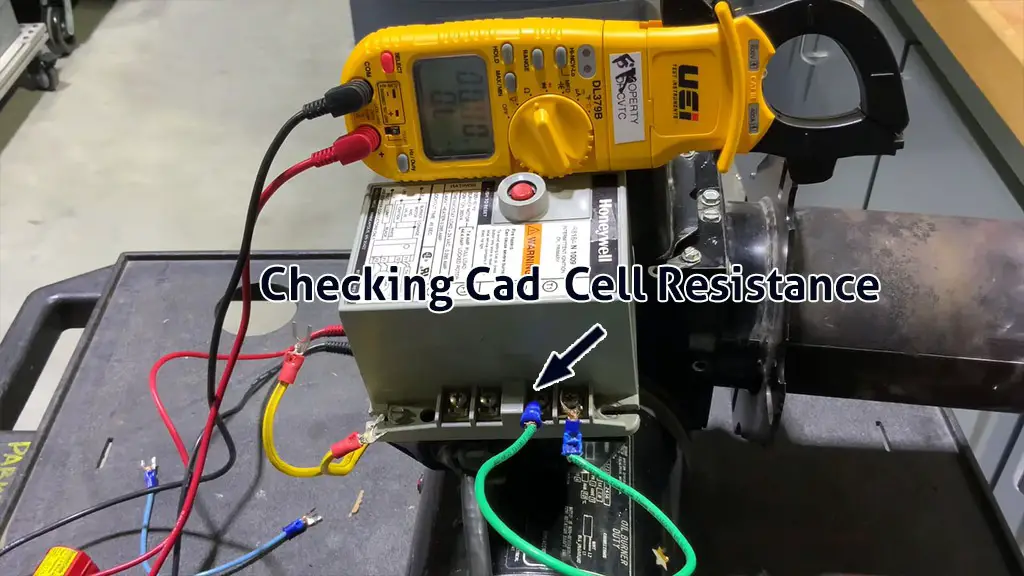
Many Honeywell R7284 controls can display CAD cell resistance readings. Generally speaking, a reading below 1,000 ohms during operation. Readings in the 300-500 ohm range are typically considered excellent. If resistance becomes excessively high, the control may have difficulty verifying the flame.
Solution:
Start by locating and inspecting the cad cell. Clean the sensor lens carefully and check the wiring connections for looseness, corrosion, or damage. Next, verify that the CAD cell has a clear view of the flame. Excessive soot inside the burner can sometimes interfere with flame detection.
If your R7284 displays cad cell resistance, monitor the reading while the burner is running. Consistently high readings may indicate a weak sensor, poor flame quality, or a failing cad cell.
Fortunately, cad cells are relatively inexpensive and easy to replace. If cleaning doesn’t improve the readings and the burner continues entering hard lockout despite having a visible flame, replacing the cad cell is usually the next step.
- Electrical Issues
If you’ve already ruled out fuel delivery, ignition, and flame detection problems, it’s time to look at the electrical side of the system. Electrical issues are less common than clogged nozzles or dirty electrodes, but they can absolutely cause a Honeywell R7284 hard lockout.
The first thing I’d check is the wiring. Oil burners operate in a harsh environment. Between vibration, heat, moisture, and years of operation, wiring connections can loosen, corrode, or become damaged.
A loose connection may work perfectly for dozens of heating cycles before suddenly interrupting power to an important component. For example, a poor connection going to the ignitor, burner motor, cad cell, or thermostat circuit can cause intermittent startup failures that are extremely difficult to diagnose.
One reason electrical problems are so frustrating is that they often leave no obvious clues behind. The burner may run normally after a reset and continue operating for hours or even days before the issue returns. Start by performing a visual inspection of all accessible wiring. Look for:
- Loose wire connections.
- Burnt terminals.
- Corrosion.
- Damaged insulation.
- Signs of overheating.
Pay particular attention to any wiring that was recently disturbed during maintenance or repairs. If the wiring appears healthy, the Honeywell R7284 control itself becomes a possibility.
I’ve seen many reported intermittent R7284 failures where the control would occasionally fail to energize the ignitor, burner motor, or other components during startup. The burner would then enter hard lockout despite no obvious fuel or ignition issues being present.
A failing control often creates the most confusing symptoms of all. The system may operate perfectly for ten cycles and then fail on the eleventh for no apparent reason.
Solution:
Begin by inspecting and tightening all accessible wiring connections. Repair any damaged wires and clean corroded terminals.
If the burner continues entering hard lockout after all other causes have been eliminated, further electrical testing may be required to verify whether the R7284 is sending power to the burner motor, ignitor, and associated components during startup.
Because control boards are among the more expensive parts in the system, they should generally be considered a last suspect rather than a first suspect. And if it’s hard for you to do it on your own, consult a qualified technician.
Only replace the Honeywell R7284 after you’ve ruled out fuel, ignition, and flame detection problems, as those issues are far more likely to be responsible for the lockout.
FAQs
How often should you replace the Honeywell R7284 nozzle?
As a general rule of thumb, you should replace it at least once every year. Otherwise, it can get clogged up with a lot of fuel and cause issues.
Can a bad thermostat cause a Honeywell R7284 hard lockout?
It’s possible but uncommon. Most hard lockouts occur because the burner failed to ignite or maintain a flame, not because of thermostat issues.
What does “No Ignition” mean on a Honeywell R7284?
“No ignition” means the burner attempted to start, but the control never detected a flame. Fuel delivery, ignition, and flame-sensing components are the most common causes.
How long does a Honeywell R7284 typically last?
With normal operating conditions, a Honeywell R7284 can often last 10 years or more. However, heat, moisture, power surges, and age can shorten its lifespan.
Conclusion
By now, you know what causes a Honeywell R7284 hard lockout and how you can fix it. It’s the result of one of the five main problems we went through.
While a simple reset may solve temporary issues, recurring lockouts should never be ignored. Start with the basics such as fuel level, filters, and ignition components before moving on to more advanced diagnostics.
By methodically working through the possible causes, you can often identify the problem and fix it. You can also check my Honeywell Gas Control Valve replacement guide if you’re facing issues with it.